Technical advantages
Implementing data architecture conforming to International data quality standards
Powered by the KOIOS Core
KOIOS Core is the foundation from which quality data is built. It consists of a data dictionary containing over 100,000 terms and definitions grouped into concepts from authoritative sources, and a data specification library containing more than 40,000 data specifications that subscribers can select from.
KOIOS Core is the knowledge base from which you build your own quality data. Subscribers can create their own "digital ready" corporate dictionary in the KOIOS platform. A quality corporate dictionary is the essential key to the standardization of your data, and helps prevent duplication by mapping your terminology across your business systems (PIM, ERP, etc.) and trade and supply ecosystems.
Advantages of this architecture for KOIOS subscribers
The essential building blocks for quality data
The KOIOS data dictionary contains over 100,000 terms and definitions from authoritative sources such as ISO, IEC, and API, grouped into concepts that enable thesaurus-style search results.
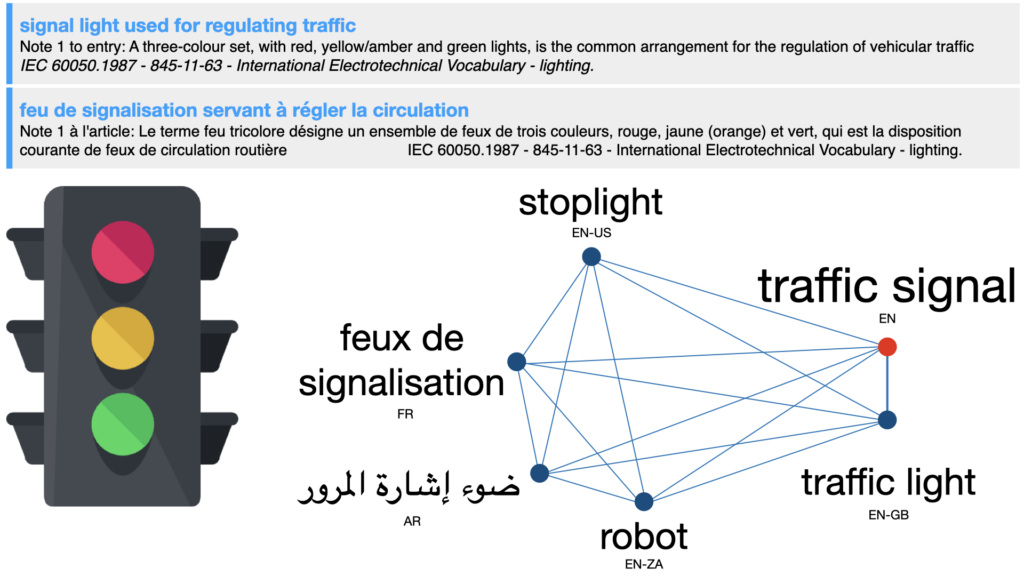
As a subscriber to the KOIOS platform you can add your own terms and definitions to existing concepts, and specify the preferred term that your organisation wishes to use from the alternatives available. Subscribers can query the dictionary to check if a potentially new term already exists — and the system will return their own previously defined preferred term.
For example, if your organisation has specified traffic signal as the preferred term, when colleagues in South Africa search for what they call a "robot", the system returns traffic signal as the preferred term from all the alternative terms mapped to it.
Corporate dictionaries are the essential key to the standardization of your data. They prevent duplication by mapping terminology across your business systems (PIM, ERP, etc.) and trade and supply ecosystems, prevent loss of meaning, and improve the clarity of your reporting.
The framework for consistent, high-quality data
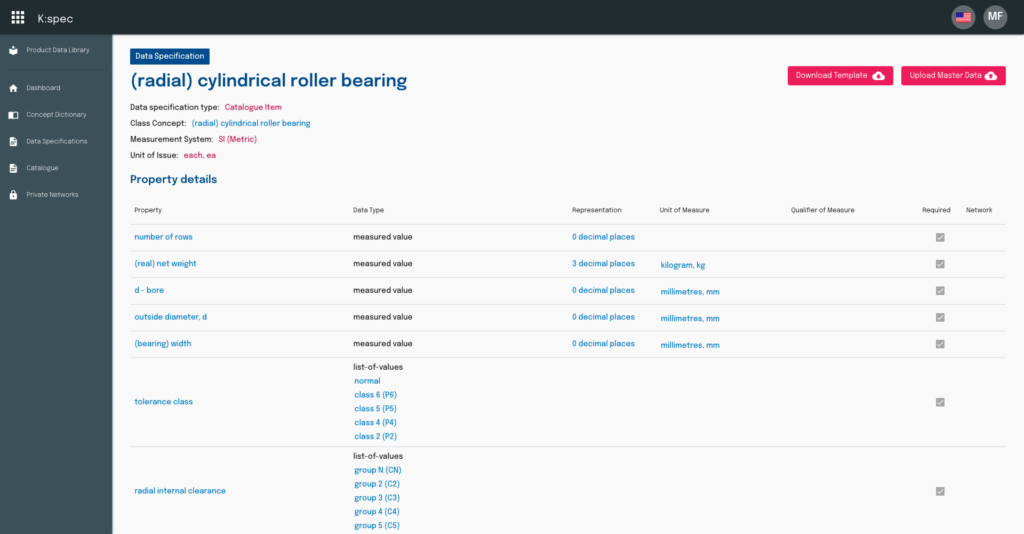
Subscribers to the KOIOS platform have access to an unrivalled data specification library — more than 40,000 specifications drawn from authoritative sources such as ISO and IEC standards, organisational standards such as NATO, and industry-specific standards such as CFIHOS.
A properly constructed data specification is the framework that ensures consistent, high-quality data. Data quality problems are not resolved simply by the top-down approach of imposing a taxonomy — high data quality is achieved by managing the detail, building from the bottom up, which in technical terms means granular management of the value tuple.
Because KOIOS has adopted the data quality and digital data exchange standards ISO 8000, ISO 22745, and ISO 29002, subscribers gain a number of further advantages: